
Finding Enterprise Resident Records
Enterprise has no city hall resident list. It is an unincorporated Clark County town. That makes place-based detail the strongest anchor: a street address, an assessor parcel number, or a recorded document number. A bare name is weak in a county this large. Ask what each source actually confirms. An assessor card ties a parcel to an owner of record. A Recorder index ties a party to an instrument. A historical directory ties a name to a dated listing.
Cross-check with two anchors before trusting a lead. Compare a parcel's legal town and APN against a deed date. Or set a dated directory page beside a street and subdivision history. A mailing address proves delivery, not occupancy. A court party proves involvement, not residence. Holding those labels apart makes an Enterprise residents directory more reliable, whether the question is family history, an heir search, a property dispute, or a careful attempt to reconnect with someone.
- Validate a known address, then search the Clark County Assessor by address, owner, or APN.
- Save the official situs spelling, legal town, APN, subdivision, and source date.
- Open the parcel in Clark County OpenWeb for map and record context.
- Use the Recorder index for a specific name, APN, document type, or date range.
- Use a library, court, or public-records request only for the question that source is equipped to answer.
Enterprise Is County Governed
Clark County's planning profile places Enterprise in the southwest Las Vegas Valley. The town is unincorporated. The Enterprise Town Advisory Board gathers community concerns and meeting information. The County created it as an advisory body. It is not city hall. It holds no resident files and no court records. That governance detail explains why a request about a parcel, recorded instrument, election record, or court case must go to the County department or court that holds it. Clark County's Enterprise planning profile shows the County context behind the local label.
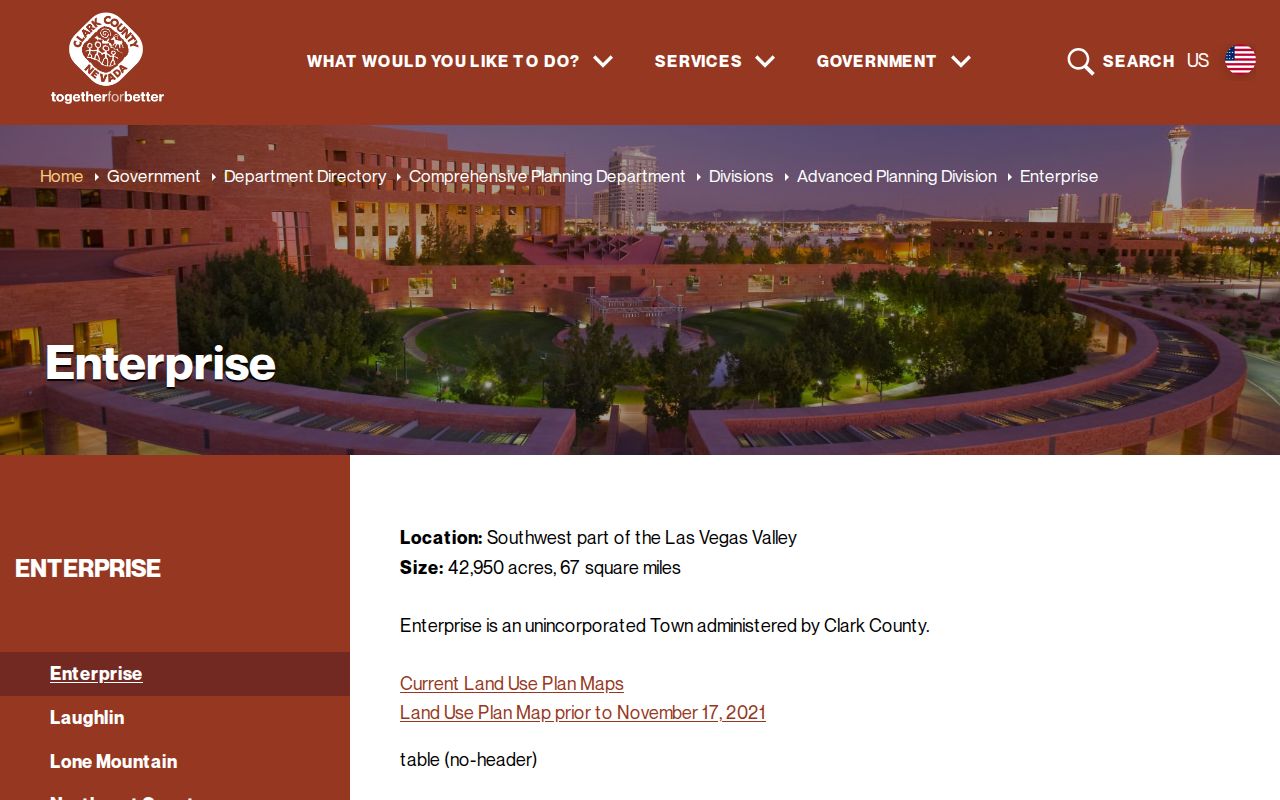
Jurisdiction is the profile's real value. It is not a residents list and no substitute for an address-based record.
Enterprise Resident Records Offices
Three offices carry most of the practical Enterprise record trail. The Assessor keeps the parcel card. The Recorder indexes deeds and offers copy routes. Elections runs voter services under Nevada law. Their systems barely overlap, so use each office for its published record type. The County's general request portal is a fallback when the right department is known but no public index exists.
Clark County Recorder
500 S Grand Central Pkwy, 2nd Floor
Las Vegas, NV 89155-1510
702-455-4336
Clark County Assessor
Real-property records and parcel searches
Clark County, Nevada
702-455-3882
Clark County Elections
965 Trade Dr
North Las Vegas, NV 89030-7802
702-455-8683
Recorder hours, branch research limits, and other access rules can change. Confirm with the office first.
Enterprise Parcel Search Routes
For a current address lead, start with the Assessor. Its owner form accepts a last name or company name, an optional first name, a phonetic option, and a choice between the current parcel record and present or prior owners. The address form splits street number, direction, name, type, and City/Town. That City/Town choice is a legal-boundary selector. It matters when a parcel's mailing city reads Las Vegas. An APN search takes the 11-digit parcel number.
| Assessor field | Use in Enterprise searches | Research note |
|---|---|---|
| Street number | Optional address starting point | A supplied number searches within three blocks |
| Street direction, name, type | Preserve official street form | Name is required for the address route |
| City/Town | Choose Enterprise when known | Legal town, not the postal-city label |
| Phonetic and record preference | Broaden or narrow results | Current record or present and prior owners |
| APN | Connects parcel systems | Direct search requires 11 digits |
A sample Enterprise parcel card shows how the official detail combines APN, mailing and situs addresses, legal description, plat, tax district, recorded document date, appraisal, construction, and sale fields. The card carries many fields in one view.
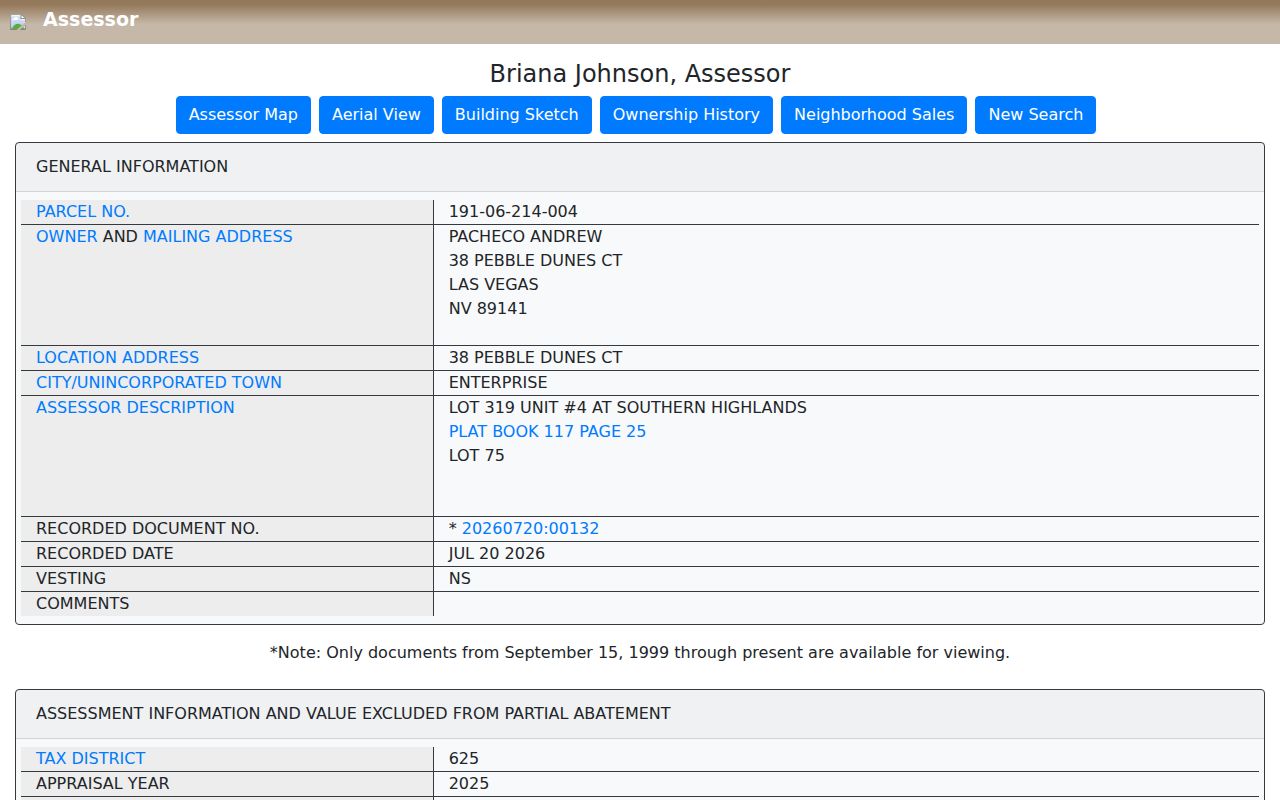
Those fields describe a parcel record, nothing more. They do not prove every named party currently lives at the property.
Enterprise Mailing And Legal Town
Enterprise records carry a local quirk worth knowing. Official Assessor and OpenWeb entries can list City or Unincorporated Town as ENTERPRISE. The mailing line still reads Las Vegas, Nevada. The postal city serves delivery. The legal-town field maps County geography. Neither label sets a court's jurisdiction or proves who lives there now.
Keep situs address, mailing address, ZIP, APN, and legal town in separate notes. That habit blocks a common error. It stops a Las Vegas mailing line from being read as proof the parcel sits inside incorporated Las Vegas. Separate notes also help when an address sits near a ZIP, tax-district, or planned-community boundary.
Enterprise Recorder Index Dates
Recorder documents add a recorded-paper layer to any Enterprise residents directory. Search options are fairly rich. Name controls cover last name, first name, and company. Matching modes include starts with, contains, and exact. You can also filter by book type, date range, and document type. Parcel searching runs on an APN with similar match, date, and document filters. Remember what the index is. It is a lead, not the paper itself. An entry can hand you a principal party, an instrument type, and a recording date. It may also give a document number, book and page, and sometimes a parcel reference to chase down at the records office.
Dates matter here. Microfilm coverage runs from 1909 to the current year. The online Official Records index opens at 1988. UCC filings start in 1986 and federal tax liens in 1984. Anything older may call for microfilm or a request at the counter. The office history also explains that bulky paper volumes covering 1909 through 1953 were microfilmed for preservation. That is why a modern search screen will not reach every early record.
Note: The index gives pointers to documents, not the recorded text itself.
- Parcel
- A numbered piece of land in the County assessment system, identified by an APN.
- Index
- A searchable summary that leads to a record, not necessarily the full image or a legal conclusion.
- Grantor and grantee
- The party transferring an interest and the party receiving it in a recorded instrument.
- Criss-cross directory
- A reverse directory arranged by address, used as a dated historical lead.
Current Enterprise Resident Sources
No single file lists everyone in Enterprise. That official all-residents record simply does not exist. Instead, each current source answers a narrower question. The Assessor names an owner of record. It also supplies parcel context. The Recorder identifies principal parties to a deed or similar instrument. Elections runs an individual-status route and publishes report families defined by statute. Courts and licensing systems each play their own limited part. Whatever the answer, carry its date, custodian, and record type along with it.
| Enterprise source | What it can establish | Custodian | Access boundary |
|---|---|---|---|
| Assessor parcel card | Owner of record, APN, mailing and situs details | Clark County Assessor | Owner is not automatically an occupant |
| Recorder index | Recorded party, instrument, and date | Clark County Recorder | Online dates differ by record set |
| Voter services and reports | Status or election data at published scope | Clark County Elections | Confidentiality and use limits apply |
| Court inquiry | Public party and case information | Correct Clark County court | Jurisdiction and sealed-case limits apply |
| Historical collections | Dated household or subscriber lead | Libraries and archives | Not proof of current occupancy |
A match in two sources is only the start. Compare dates, addresses, party roles, and legal descriptions before you draw any conclusion about an Enterprise resident.
Enterprise Court Search Boundaries
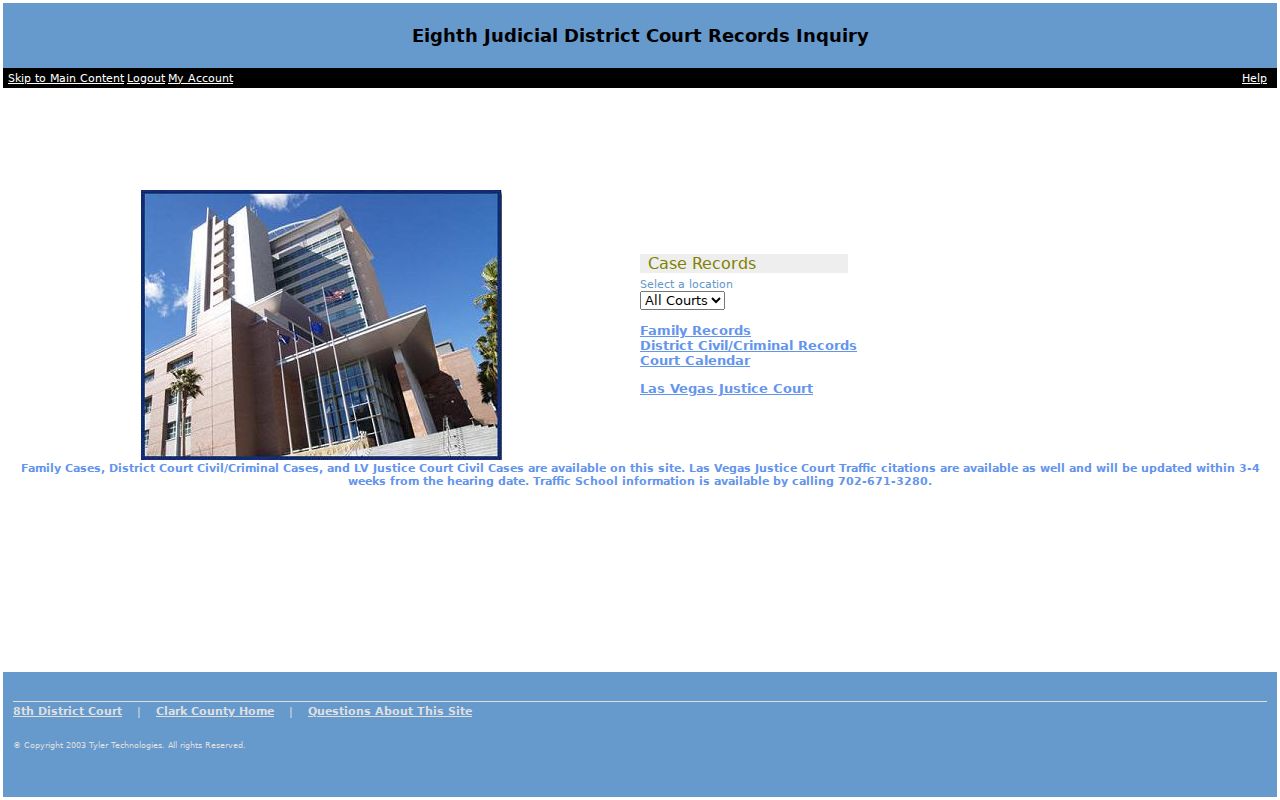
Court records are case files, not an Enterprise resident directory. Clark County Courts Odyssey opens family, district civil or criminal, and calendar pathways. The clerk's guidance places most online material from 1990 forward, with division and sealed-case limits. CourtFinder takes name, case, or bar terms alongside party-type and short date-range filters. A name on a docket can mean many things. It never makes someone an Enterprise resident on its own. The court and case type may already be known. In that case, the county court inquiry screen is a sensible first stop.
Las Vegas Municipal Court sits in a separate City of Las Vegas jurisdiction. Its online form asks for last name and date of birth. So an Enterprise mailing address tells you nothing about whether that court holds a case.
Enterprise Voter Record Limits
Clark County Elections publishes voter services and district and precinct reports. It posts list-data routes and turnout material as well. Other election records sit in the same office. The Registered Voter Services endpoint runs as a protected web flow. It offers no stable public search fields. Nevada's NRS Chapter 293 splits public list information from protected information. Registration location can be confidential. Social Security, driver-license, identification, and email fields are protected outright.
Use these tools to verify your own status or to read public election geography. A precinct tally is not a roster of who lives on a street. Do not stretch totals, a ZIP code, or an Enterprise label into a residents directory. A ZIP and a precinct answer different geographic questions.
Enterprise Vital And Custody Routes
Vital and custody systems serve narrow purposes. Nevada Vital Records holds birth and death records from July 1, 1911 forward. Under NRS Chapter 440, birth certificates open to the public after 125 years. Death certificates open after 50. Current copies carry eligibility, identity, and proof requirements. These are not a current resident directory. A historic death notice or an eligible record works as a dated family-history lead. It is not a claim on a present address. Separately, the Nevada Department of Corrections Offender Search takes an offender ID or name. Its own scope covers sentenced prison custody only. It does not cover recent arrests, local detention, probation, or parole.
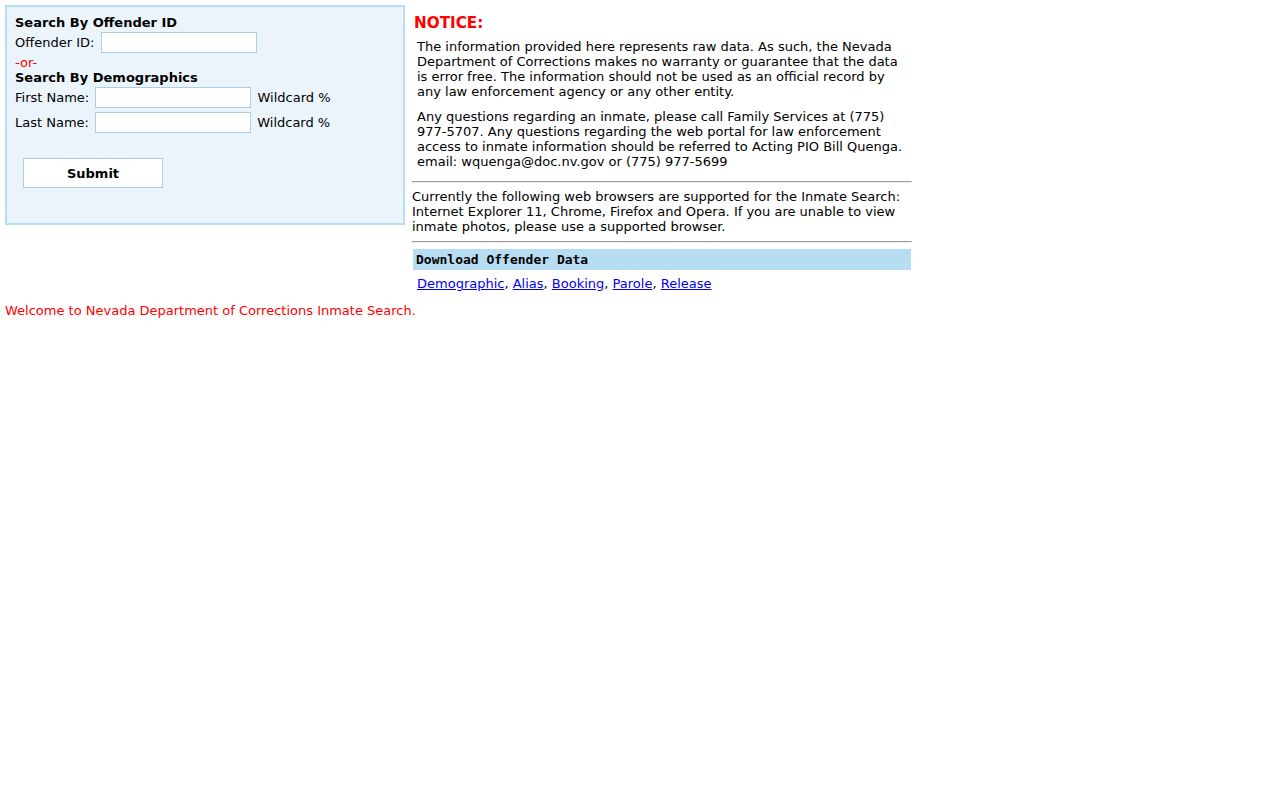
A custody result ties a person to a system at one point in time. It establishes no home address, and a no-result never proves the absence of a record.
Historical Enterprise Resident Directories
Older Enterprise questions demand historical collections. The town's modern subdivisions are younger than much of the regional directory shelf. The Las Vegas-Clark County Library District genealogy resources open doors to newspapers, city directories, HeritageHub, Ancestry Library Edition, HeritageQuest, and other databases. Access may hinge on a library card, a library computer, or a vendor's rules. Keep a citation with every historical lead. Edition, page, reel, or image number should ride along too.
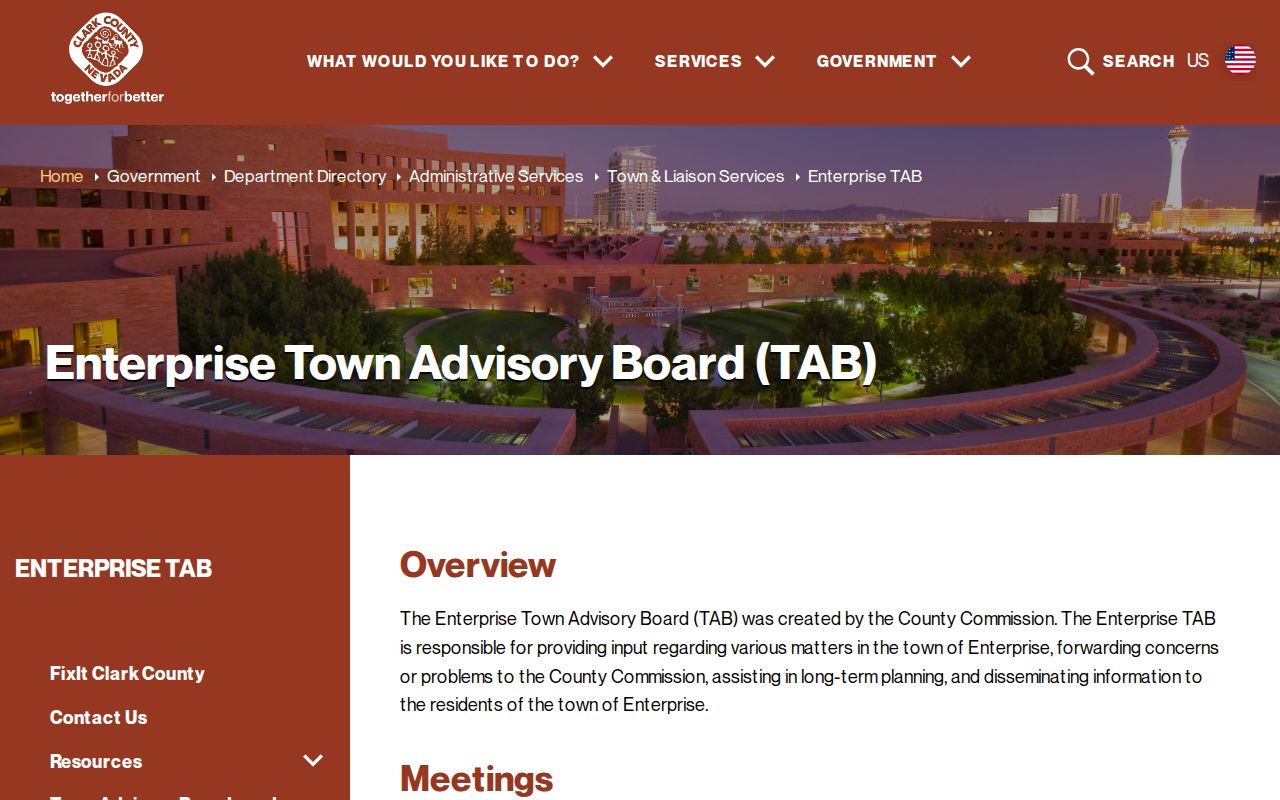
UNLV holds a four-reel Nevada Territory city-directory collection covering 1861 to 1882, call number F839.5 .U58x 1975. Its entries include residents, occupations, residences, family heads, businesses, and street directories. All of it predates the modern Enterprise footprint. Reports also place Las Vegas Criss-Cross volumes from 1954, 1956, 1957, 1959, 1966, and 1967 at the Nevada State Museum, Las Vegas. Check the target road and edition before assuming coverage. The fuller collection trail lives on the Enterprise city directory page. The Enterprise Town Advisory Board page offers another local-government angle. It carries community routing information rather than historic household listings.
For an old address, timing decides everything. Pair the directory or newspaper date with the parcel's construction and subdivision chronology before treating a lead as an Enterprise household.
Enterprise Development Dates Matter
Dates can make or break a lookup in the Enterprise residents directory. Mountain's Edge is a good example. Clark County describes the planned community as about 2,500 acres south of Blue Diamond and west of Rainbow. It was approved in September 2002. Its development agreement was later canceled in January 2022 after subsequent changes. So a directory hit from decades before that approval is suspicious. It may point to another place, an earlier road, or a source that simply does not describe the present parcel.
The Assessor and OpenWeb record stronger timing clues than a postal-city label ever will. Subdivision, plat book or page, lot or block, construction year, and tax district all sit in the parcel fields. Those details anchor a property to its real era. They also explain why an old Las Vegas map or city directory can serve as valuable regional context. Yet it may never index a modern Enterprise street.
Enterprise Records: Official Or Commercial
Official records and commercial people-search compilations answer very different questions. A County portal names its custodian, scope, and source date. A commercial compilation may blend public indexes, licensed data, and address histories. It may also add marketing data and partner material. That mix can create duplicate names, old addresses, merged profiles, or incomplete source context. Treat any commercial result as an unverified lead. Then confirm it through the responsible records office.
| Source type | Best use | Key limitation |
|---|---|---|
| Official County portal | Verify a specific parcel, instrument, or case route | Each portal has its own date and jurisdiction limits |
| Library or archive collection | Find a dated directory, newspaper, or map lead | Coverage and digitization vary by collection |
| Commercial compilation | Generate a lead to verify independently | May be stale, duplicated, or unclear about source dates |
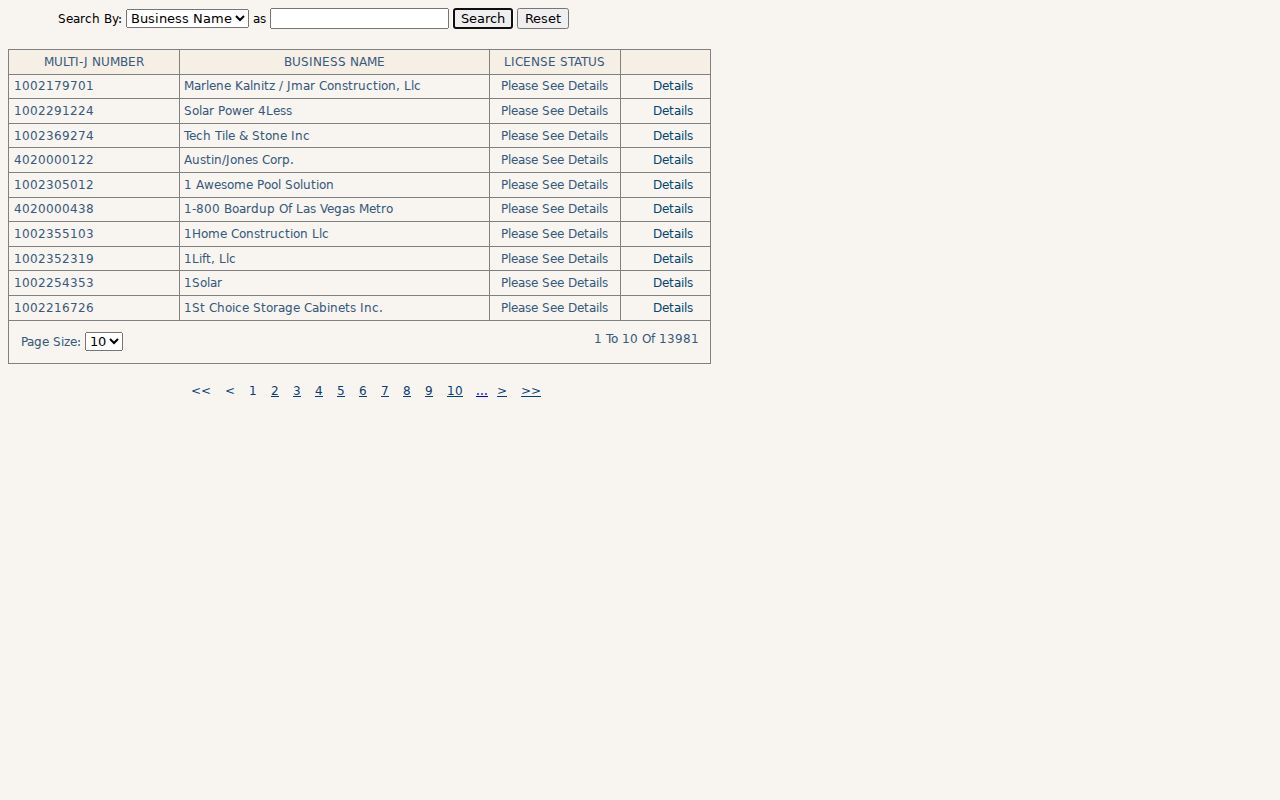
Clark County's business-license search is another official but narrow source. Its location, mailing, parcel, classification, and status fields describe a license record, not a personal residence, so never relabel them as one in a resident lookup.
Source labels carry real weight. Checked dates let you revisit a result when a portal, record, or address changes. Nevada Secretary of State business resources and SilverFlume offer separate State entity routes. A registered-agent or business address needs the same careful labeling as a County license address. For a possible unclaimed asset, go straight to the official Nevada Treasurer search. Skip any intermediary site. Nevada's NRS Chapter 120A sets out the public-database context. It also defines the confidentiality rules for that separate record type.
Lawful Enterprise Records Use
Nevada's Public Records Act, NRS Chapter 239, frames how to request records from the correct custodian. A focused request should name the department, record type, date range, address, APN, case number, or document number. NRS 239.0107 describes a five-business-day response framework. The custodian must release the record, send a written denial citing authority, or give written notice of when it may be available. Fees vary by custodian. The Recorder's copy rate is not a Countywide rule.
Nevada also protects certain voter, vital, DMV, court, and confidential-address information. Some seals are absolute. If a source is sealed, protected, or outside its published purpose, stop there rather than trying to splice other fields into a workaround.