
Finding Enterprise Resident Records
Enterprise has no incorporated city clerk or municipal resident roll. It is an unincorporated Clark County town, so the most dependable resident-directory trail begins with the detail already tied to a place: a street address, an assessor parcel number, or a recorded document number. A name can help, but a name alone is weak in a county this large. The useful question is what a particular source can actually confirm. An assessor card connects a parcel to an owner of record. A Recorder index connects a party to a recorded instrument. A historical directory connects a name or subscriber to a dated listing.
Use two independent anchors before treating a lead as strong. For example, compare a parcel's legal town and APN with a deed date, or compare a dated directory page with a street and subdivision history. A mailing address does not establish occupancy. A court party does not establish residence. Keeping those labels separate makes an Enterprise residents directory more reliable for family history, an heir search, a property question, or a careful attempt to reconnect with someone.
- Validate a known address, then search the Clark County Assessor by address, owner, or APN.
- Save the official situs spelling, legal town, APN, subdivision, and source date.
- Open the parcel in Clark County OpenWeb for map and record context.
- Use the Recorder index for a specific name, APN, document type, or date range.
- Use a library, court, or public-records request only for the question that source is equipped to answer.
Enterprise Is County Governed
Clark County's planning profile identifies Enterprise as an unincorporated town in the southwest Las Vegas Valley. The Enterprise Town Advisory Board is a County-created advisory body for community concerns and meeting information. It is not a city hall, a court, or a repository of resident files. That governance detail explains why a request about a parcel, recorded instrument, election record, or court case must go to the County department or court that holds it.
Clark County's Enterprise planning profile shows the County context behind the local label.
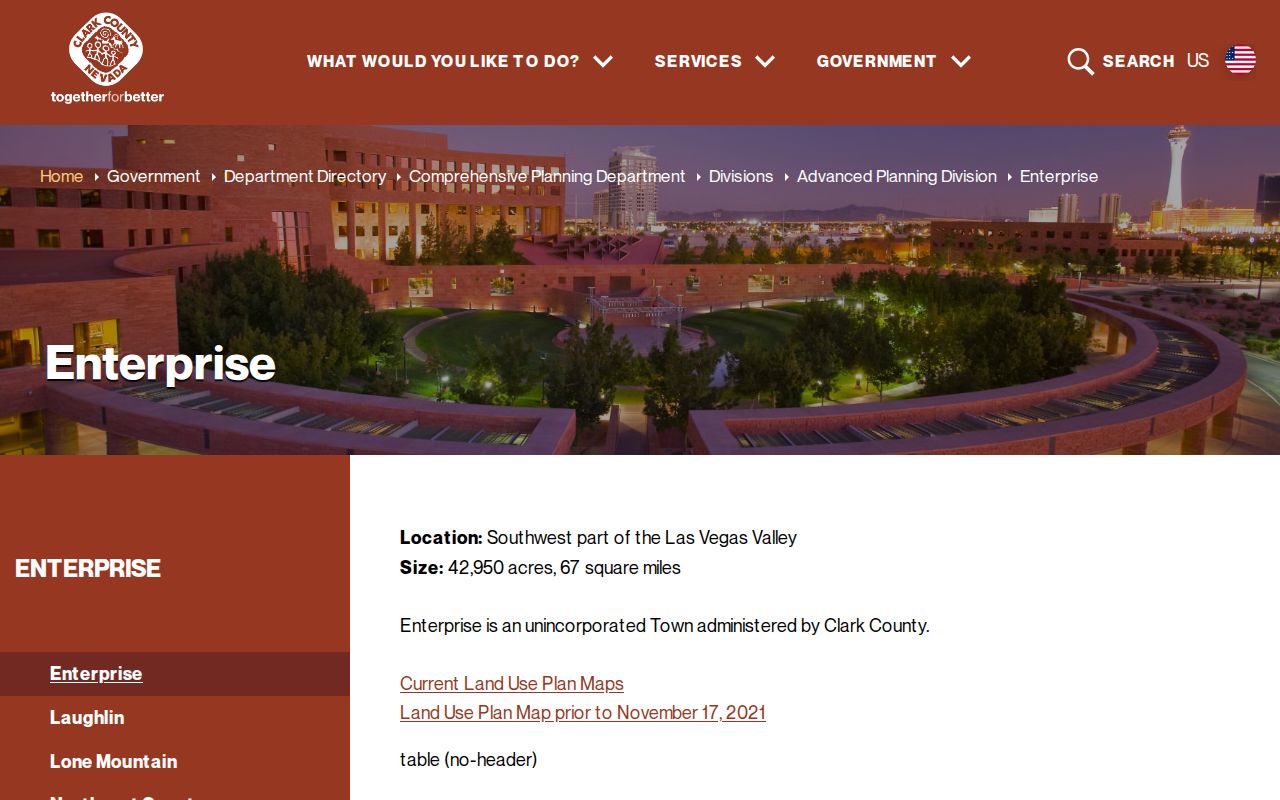
The profile is useful for jurisdiction, but it is not a list of Enterprise residents or a substitute for an address-based record.
Enterprise Resident Records Offices
Three offices supply much of the practical Enterprise record trail. The Assessor keeps the parcel card. The Recorder indexes recorded land instruments and offers copy routes. Elections maintains its own voter-services and public-report channels under Nevada law. Their systems overlap only in small ways, so each one should be used for its published record type. The County's general request portal is a fallback when the correct department is known but no public index exists.
Clark County Recorder
500 S Grand Central Pkwy, 2nd Floor
Las Vegas, NV 89155-1510
702-455-4336
Clark County Assessor
Real-property records and parcel searches
Clark County, Nevada
702-455-3882
Clark County Elections
965 Trade Dr
North Las Vegas, NV 89030-7802
702-455-8683
Recorder hours and branch research limits, as well as other department access rules, can change. Confirm them with the office before a visit.
Enterprise Parcel Search Routes
For a current address lead, the Assessor is the first County index to try. Its owner form takes a last name or company name, an optional first name, a phonetic option, and a choice between the current parcel record and present or prior owners. The address form separates street number, direction, name, type, and City/Town. The City/Town choice is a legal-boundary selector, which matters when a parcel's mailing city is Las Vegas. An APN search takes the 11-digit parcel number.
| Assessor field | Use in Enterprise searches | Research note |
|---|---|---|
| Street number | Optional address starting point | A supplied number searches within three blocks |
| Street direction, name, type | Preserve official street form | Name is required for the address route |
| City/Town | Choose Enterprise when known | Legal town, not the postal-city label |
| Phonetic and record preference | Broaden or narrow results | Current record or present and prior owners |
| APN | Connects parcel systems | Direct search requires 11 digits |
A sample Enterprise parcel card illustrates how the official detail combines APN, mailing and situs addresses, legal description, plat, tax district, recorded document date, appraisal fields, construction, and sale fields.
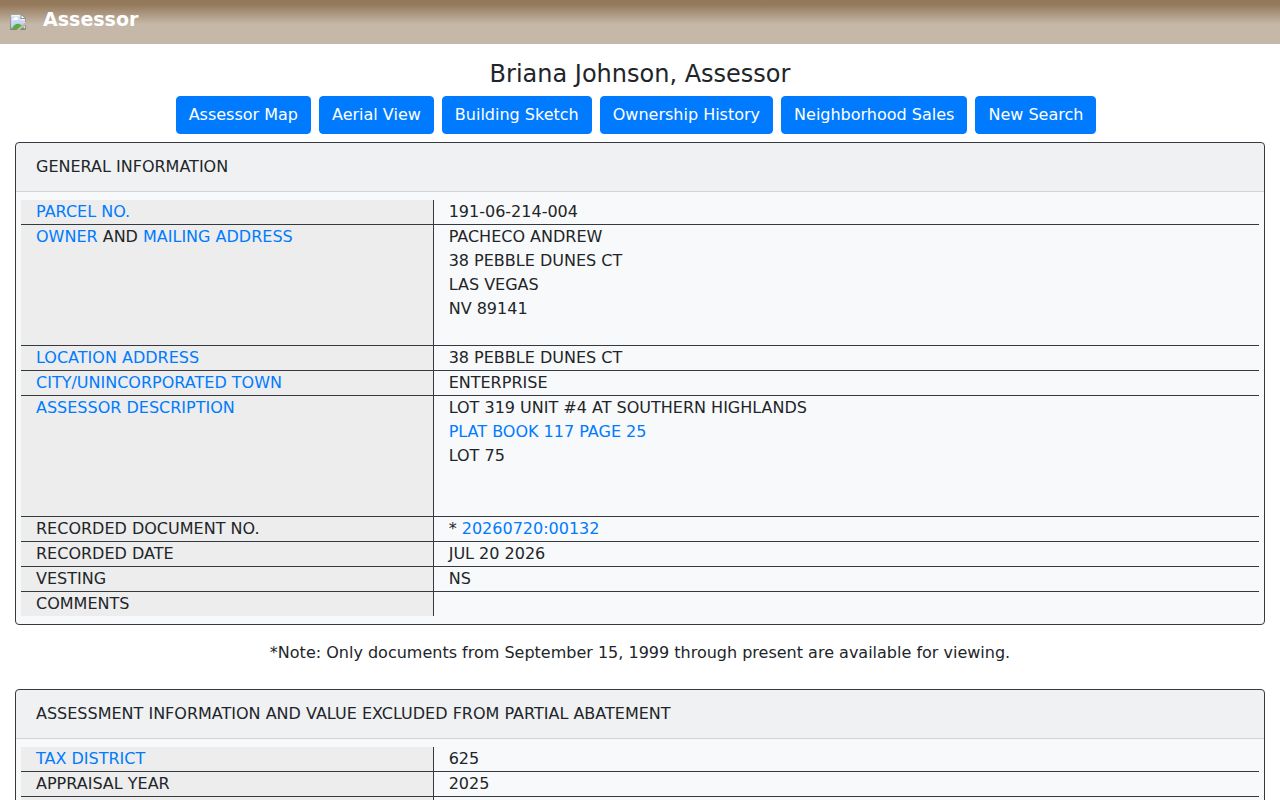
Those fields describe a parcel record. They should not be collapsed into a claim that every named party currently lives at the property.
Enterprise Mailing And Legal Town
Enterprise records carry a useful local quirk. Official Assessor and OpenWeb examples can show City or Unincorporated Town as ENTERPRISE while the mailing line says Las Vegas, Nevada. The postal city is useful for delivery. The legal-town field is useful for County geography. Neither label alone identifies a court's jurisdiction or proves current residence.
Keep the situs address, mailing address, ZIP, APN, and legal town in separate notes. That habit prevents a common error in Enterprise research: treating a Las Vegas mailing address as proof that the parcel is within incorporated Las Vegas. It also helps when an address lies near a ZIP, tax-district, or planned-community boundary.
Enterprise Recorder Index Dates
The Recorder adds the recorded-document layer to an Enterprise residents directory. Name search controls include last name, first name, company, starts with, contains, exact match, book type, date range, show names, and document type. Parcel searching uses APN with similar match, date, and document filters. The index is the lead, not the document itself. It can point to a principal party, instrument type, recording date, document number, book or page, and sometimes a parcel reference.
The date split is important. Clark County describes microfilm from 1909 through the current year, while the online Official Records index begins in 1988. UCC begins in 1986 and federal tax liens begin in 1984. Older work may require microfilm or an office request. The Recorder's history also describes large 1909-1953 paper volumes that were microfilmed for preservation, a useful explanation for why a modern search screen does not cover every older record.
- Parcel
- A numbered piece of land in the County assessment system, identified by an APN.
- Index
- A searchable summary that leads to a record, not necessarily the full image or a legal conclusion.
- Grantor and grantee
- The party transferring an interest and the party receiving it in a recorded instrument.
- Criss-cross directory
- A reverse directory arranged by address, used as a dated historical lead.
Current Enterprise Resident Sources
There is no official all-residents file for Enterprise. Current sources answer narrower questions. The Assessor can identify an owner of record and parcel context. The Recorder can identify principal parties to a deed or other instrument. Elections offers an individual-status route and public report families subject to statute. Courts and license systems have their own limited roles. A result's date, custodian, and record type should travel with the result.
| Enterprise source | What it can establish | Custodian | Access boundary |
|---|---|---|---|
| Assessor parcel card | Owner of record, APN, mailing and situs details | Clark County Assessor | Owner is not automatically an occupant |
| Recorder index | Recorded party, instrument, and date | Clark County Recorder | Online dates differ by record set |
| Voter services and reports | Status or election data at published scope | Clark County Elections | Confidentiality and use limits apply |
| Court inquiry | Public party and case information | Correct Clark County court | Jurisdiction and sealed-case limits apply |
| Historical collections | Dated household or subscriber lead | Libraries and archives | Not proof of current occupancy |
A name that appears in two sources still needs context. Compare the record dates, addresses, party roles, and legal descriptions before drawing a conclusion.
Enterprise Court Search Boundaries
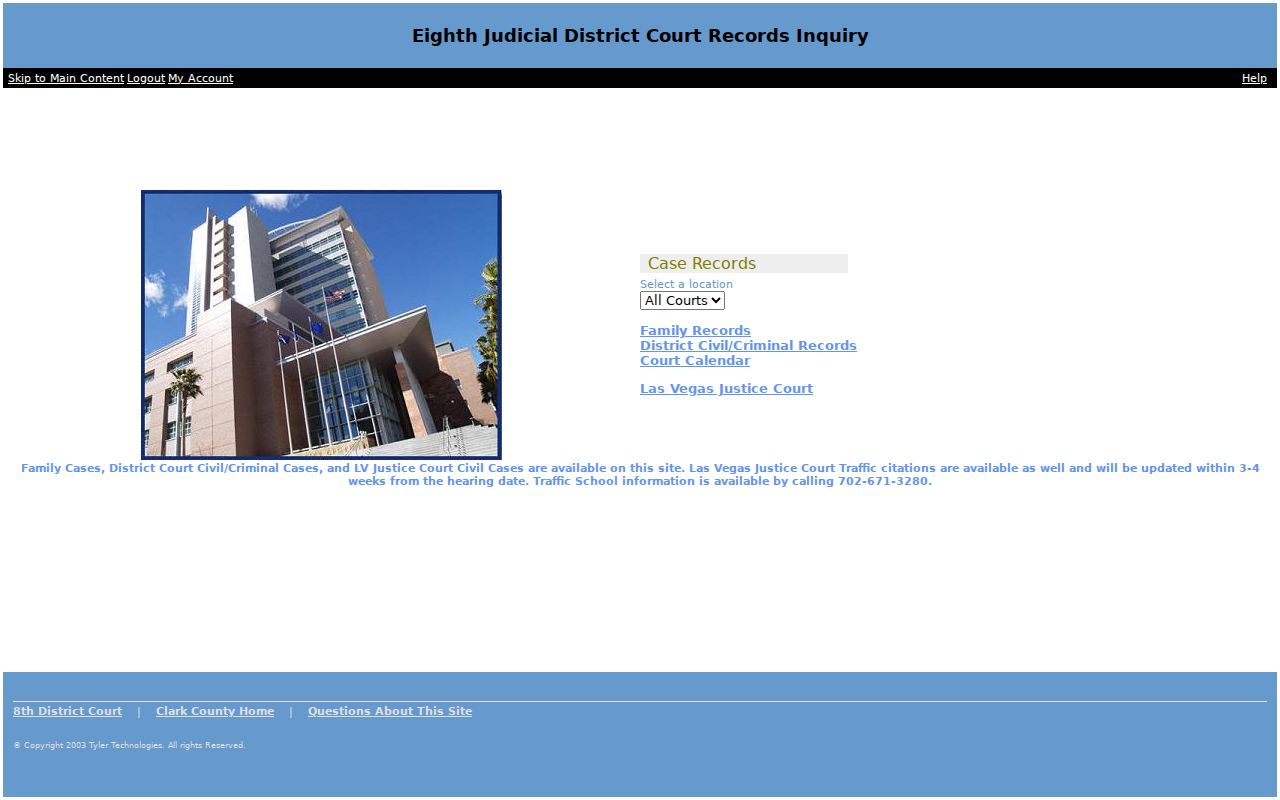
Court records are case-based sources, not Enterprise resident directories. Clark County Courts Odyssey offers family, district civil or criminal, and calendar pathways, while the clerk's guidance says online material generally reaches 1990 forward with division and sealed-case limits. CourtFinder accepts name, case, or bar terms with party-type and short date-range controls. A case party can have many connections to a matter and does not become an Enterprise resident because a name matches.
The County court inquiry screen is a useful first stop when the court and case type are known.
Las Vegas Municipal Court is a separate City of Las Vegas jurisdiction. Its online form uses last name and date of birth, so an Enterprise mailing address does not decide whether that court holds a particular case.
Enterprise Voter Record Limits
Clark County Elections publishes voter services, district and precinct reports, list-data routes, turnout material, and other election records. The current Registered Voter Services endpoint is a protected web flow, and the research did not capture stable public search fields. Nevada NRS Chapter 293 also separates public list information from protected information. Registration location can be confidential, and Social Security, driver-license, identification, and email fields are protected.
Use voter resources to verify one's own status or to understand public election geography. Do not turn precinct totals, a ZIP, or an Enterprise label into a roster of people on a street. A ZIP and a precinct solve different geographic questions.
Enterprise Vital And Custody Routes
Vital and custody systems have narrow purposes. Nevada Vital Records is the custodian for birth and death records beginning July 1, 1911. Under NRS Chapter 440, birth certificates become public after 125 years and death certificates after 50 years. Current copies have eligibility, identity, and proof requirements. They are not a current resident directory. A historic death notice or eligible record can be a dated family-history lead, not a current address claim.
Nevada Department of Corrections Offender Search accepts offender ID or name and describes its scope as sentenced prison custody, not recent arrests, local detention, probation, or parole.
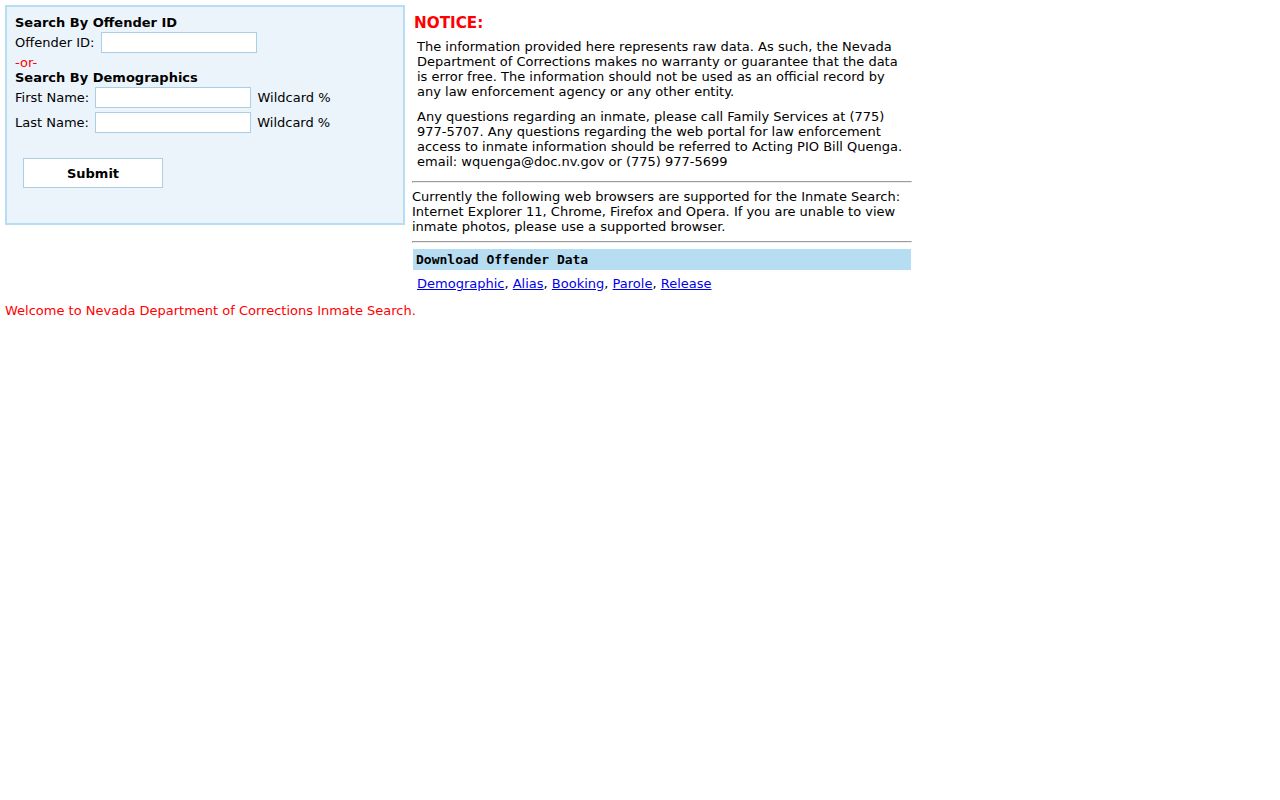
A custody result associates a person with a system at a point in time. It does not establish a home address, and a no-result does not prove that no record exists.
Historical Enterprise Resident Directories
Older Enterprise questions need historical collections, because the town's modern subdivisions are newer than much of the regional directory shelf. The Las Vegas-Clark County Library District genealogy resources point to newspapers, city directories, HeritageHub, Ancestry Library Edition, HeritageQuest, and other research databases. Access can depend on a library card, a library computer, or a vendor's rules. A citation, edition, page, reel, or image number should be kept with every historical lead.
UNLV holds a four-reel Nevada Territory city-directory collection for 1861-1882, call number F839.5 .U58x 1975. It lists types of entries such as residents, occupations, residences, family heads, businesses, and street directories, but it predates the modern Enterprise footprint. Reports also cite Las Vegas Criss-Cross volumes from 1954, 1956, 1957, 1959, 1966, and 1967 at the Nevada State Museum, Las Vegas. Check a target road and edition before assuming coverage. The fuller collection trail belongs on the Enterprise city directory page.
The Enterprise Town Advisory Board page is another useful local-government source, although it keeps community routing information rather than historic household listings.
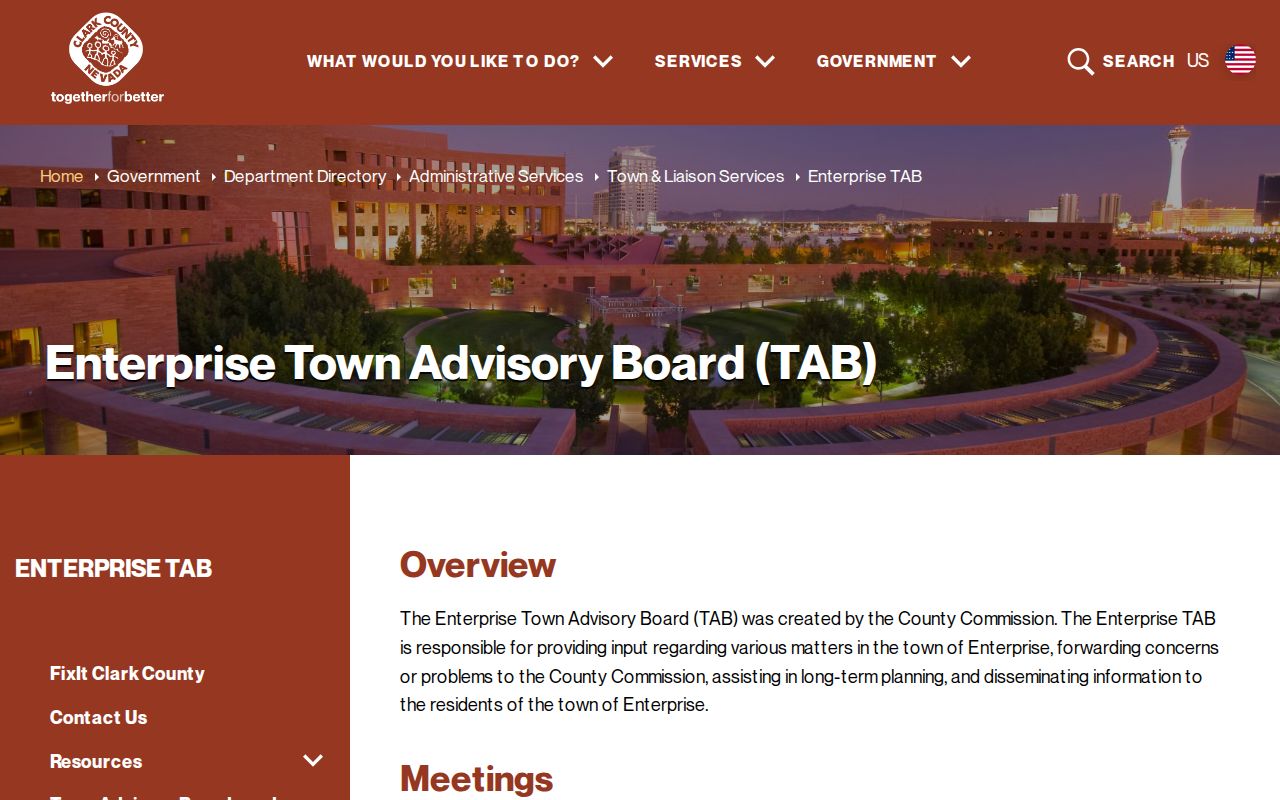
For an old address, pair a directory or newspaper date with the parcel's construction and subdivision chronology before treating it as an Enterprise household lead.
Enterprise Development Dates Matter
Mountain's Edge gives an Enterprise-specific date check for historical work. Clark County describes the planned community as about 2,500 acres south of Blue Diamond and west of Rainbow, approved in September 2002; its development agreement was later canceled in January 2022 after subsequent changes. A directory hit from decades before that approval may point to another place, an earlier road, or a source that does not describe the present parcel.
The Assessor and OpenWeb record subdivision, plat book or page, lot or block, construction year, tax district, and other parcel fields. Those are often stronger timing clues than a broad postal-city label. They also explain why an old Las Vegas map or directory can be valuable regional context without being an index for a modern Enterprise street.
Enterprise Records: Official Or Commercial
Official records and commercial people-search compilations answer different questions. A County portal identifies its custodian, scope, and source date. A commercial compilation may blend public indexes, licensed data, address histories, marketing data, and partner material. That can create duplicate names, old addresses, merged profiles, or incomplete source context. Treat any commercial result as an unverified lead, then confirm it through the responsible office.
| Source type | Best use | Key limitation |
|---|---|---|
| Official County portal | Verify a specific parcel, instrument, or case route | Each portal has its own date and jurisdiction limits |
| Library or archive collection | Find a dated directory, newspaper, or map lead | Coverage and digitization vary by collection |
| Commercial compilation | Generate a lead to verify independently | May be stale, duplicated, or unclear about source dates |
Clark County's business-license search is another official but narrow source. Its location, mailing, parcel, classification, and status fields concern a license record and should not be relabeled as a personal residence.
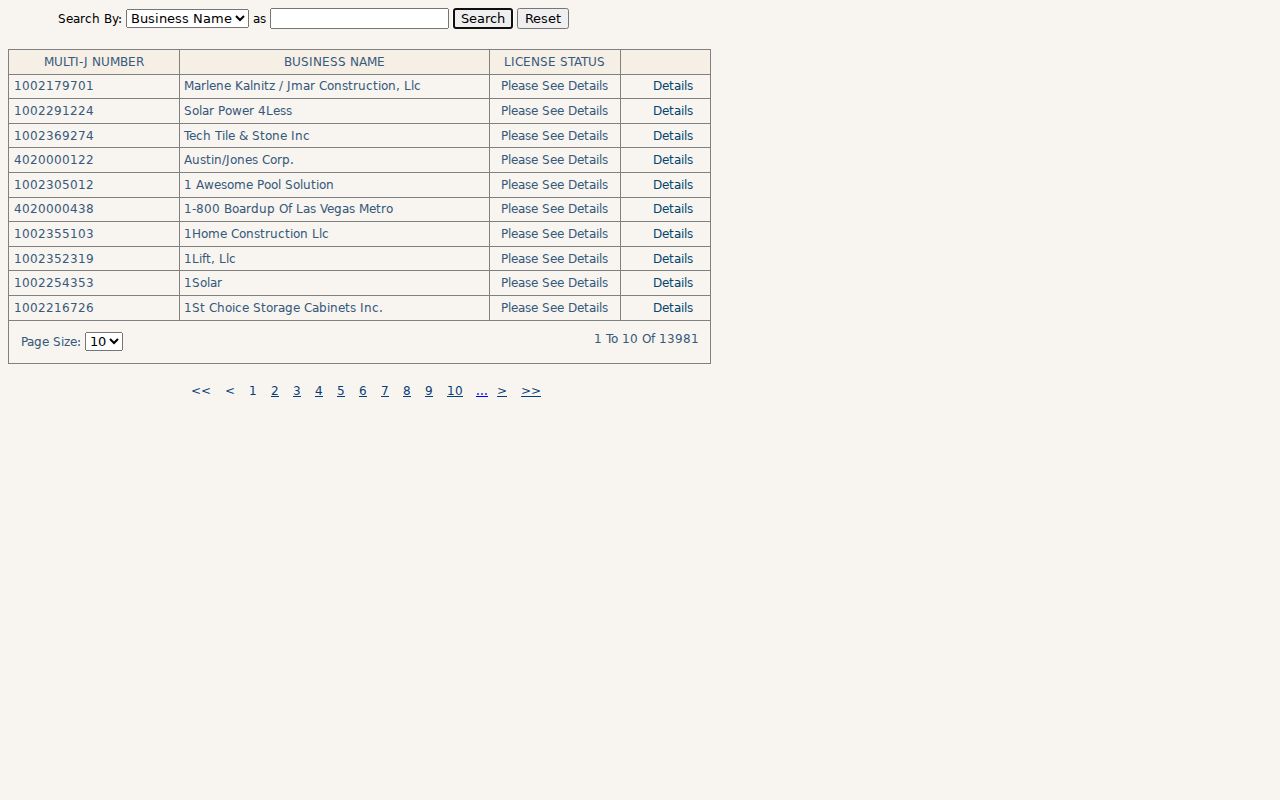
Source labels and checked dates make it possible to revisit a result when a portal, record, or address changes.
Nevada Secretary of State business resources and SilverFlume provide separate State entity routes. A registered-agent or business address needs the same careful labeling as a County license address.
For a possible unclaimed asset, use the official Nevada Treasurer search rather than an intermediary. Nevada's NRS Chapter 120A provides the public-database and confidentiality context for that separate record type.
Lawful Enterprise Records Use
Nevada's Public Records Act, NRS Chapter 239, provides a framework for requests to the correct custodian. A focused request should identify the department, record type, date range, address, APN, case number, or document number. NRS 239.0107 describes a five-business-day response framework: release, a written denial citing authority, or written notice of when a record may be available. Fees vary by custodian, so the Recorder's copy rate is not a Countywide rule.
Nevada also protects some voter, vital, DMV, court, and confidential-address information. If a source is sealed, protected, or outside its published purpose, stop rather than trying to combine other fields into a workaround.