
Enterprise Previous Residents by Era
Enterprise has no separate city archive because it is an unincorporated Clark County town. A backward address search therefore crosses County recording records, parcel data, library collections, and regional sources. Start with a precise situs address and APN, then set the date range. Recorded ownership is a strong starting point, but it does not establish an occupant. A dated directory or newspaper item can add a household lead, while a map can explain whether the street or subdivision existed at all.
| Source | Years It Covers | Where Held | What It Shows |
|---|---|---|---|
| Recorder microfilm | 1909-current | Clark County Recorder offices and branches | Older recorded instruments and large-volume record history |
| Official Records index | 1988-current | Clark County Recorder online search | Principal parties, instrument details, dates, and copy route |
| Las Vegas Criss-Cross directories | 1954, 1956, 1957, 1959, 1966, 1967 cited | Nevada State Museum, Las Vegas | Dated reverse-address leads when an edition includes the road |
| Las Vegas city directory | 1969 located | UNLV MS-00809, box 12 | Directory lead and archival request information |
| Regional newspapers | LVRJ images 1929-1996; text 1996-current | UNLV and Library District resources | Notices, clippings, obituaries, and dated context |
| Historic maps | 1928 and 1956 located | Library of Congress and UNLV | Regional street context, not proof an Enterprise street existed |
The oldest source is not always the best first choice. For a modern subdivision, begin with the parcel record and Recorder index. For an older address, retain the exact street spelling, directory edition, page or reel, and instrument number so another search can be repeated.
Enterprise Previous Residents and Parcels
Use Clark County Assessor Real Property Records to anchor an Enterprise address before tracing it backward. The address form has a City/Town selector and a choice between the current parcel-number record and present-and-prior-owner view. Write down the APN, situs address, legal description, plat book or page, legal town, mailing city, and any recorded-document reference. The Assessor regards its map as assessment and reference material, not a survey or title opinion, so the recorded document remains the next check.
A parcel card can show an owner of record and a separate mailing address. Neither field alone says who lived there. That distinction prevents a prior owner from being reported as a former household member without a dated directory, newspaper, or other suitable historical lead.
Start with the Recorder parcel-index search when the APN is known.
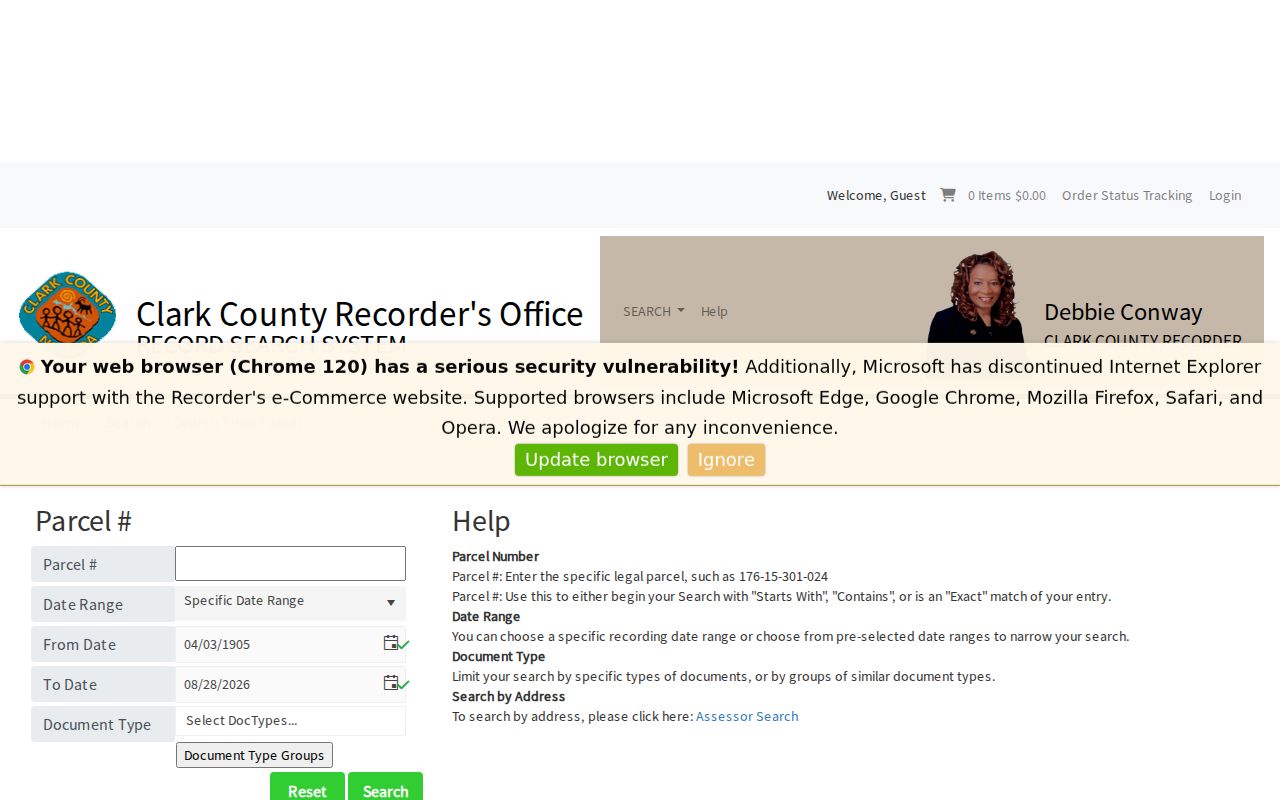
The parcel form is a bridge between the address record and an instrument search. Record its date and filters, because a narrow document type or date range can change the result set.
Enterprise Previous Residents Recorder Trail
The Clark County Recorder indexes principal party names and recording years, with name, parcel, instrument, document type, book/page, record date, total-value, and legal-description search modes. Its online Official Records index starts in 1988. Earlier material is held on microfilm, even though the County’s Recorder statistics describe microfilm from 1909 through the current year. The public website supplies a brief searchable summary; original documents are not displayed there.
For a useful address history, treat an index hit as a lead rather than a conclusion. Confirm the instrument number, recording date, document type, parties, and legal description. A deed, reconveyance, trust deed, plat, or notice can have different meaning for the property trail. The Recorder accepts parcel searches, but its own search tips direct address searching to the Assessor first.
Note: When an online search reaches an earlier gap, contact the Recorder or a branch about microfilm access and its limited research-service availability.
Enterprise Previous Residents Deed Steps
A chain of title follows recorded transfers, not a list of everyone who lived at an address. Begin with the Assessor’s current or prior-owner view, then use the APN and legal description to find a verified Recorder instrument. From that deed, capture the seller or grantor, the buyer or grantee, recording date, document type, and instrument number. Search the seller as a grantee to find the earlier purchase, then repeat the sequence backward. Each link should be supported by an instrument, not a similarly named party alone.
- Locate the current parcel and copy its APN, situs, legal town, and legal description.
- Find a matching Recorder instrument by parcel, party, date, or legal-description controls and verify the document details.
- Use the seller or grantor from that transfer as a grantee in an earlier search, then open the earlier instrument.
- Continue backward until the online index ends, then branch to Recorder microfilm or a copy request for the prior period.
- Stop and re-check the parcel trail if a trust, company, estate, or changed legal description appears. Those events can require a different party search or a plat review.
- Grantor
- The party conveying an interest in a recorded instrument, commonly the seller in a deed.
- Grantee
- The party receiving that interest. Searching a prior grantor as a grantee often finds an earlier acquisition.
- Chain of title
- A documented sequence of recorded transfers affecting the same parcel or legal description.
- Legal description
- The lot, subdivision, unit, plat, or other recorded land description that identifies property more reliably than an old street label.
Enterprise Previous Residents and RNS
Clark County’s Recorder Notification Service, or RNS, is a useful watch layer after an address history has been established. One email can monitor up to five names or parcel numbers, and the service warns that similar names can create confusing notices. It reports filings made after sign-up. It is not retroactive, and it is not the official record. A new alert still calls for an index check and, when needed, a copy.
The Recorder’s history helps explain the split between web searching and archival work. County material describes early records from 1909 through 1953 in large volumes, later microfilmed for security in a fireproof vault, before the move toward digital preservation. That preservation path is why an Enterprise past-residents trail can begin online yet still require microfilm or a requested copy.
Use the Recorder’s copy-order page after identifying the instrument.
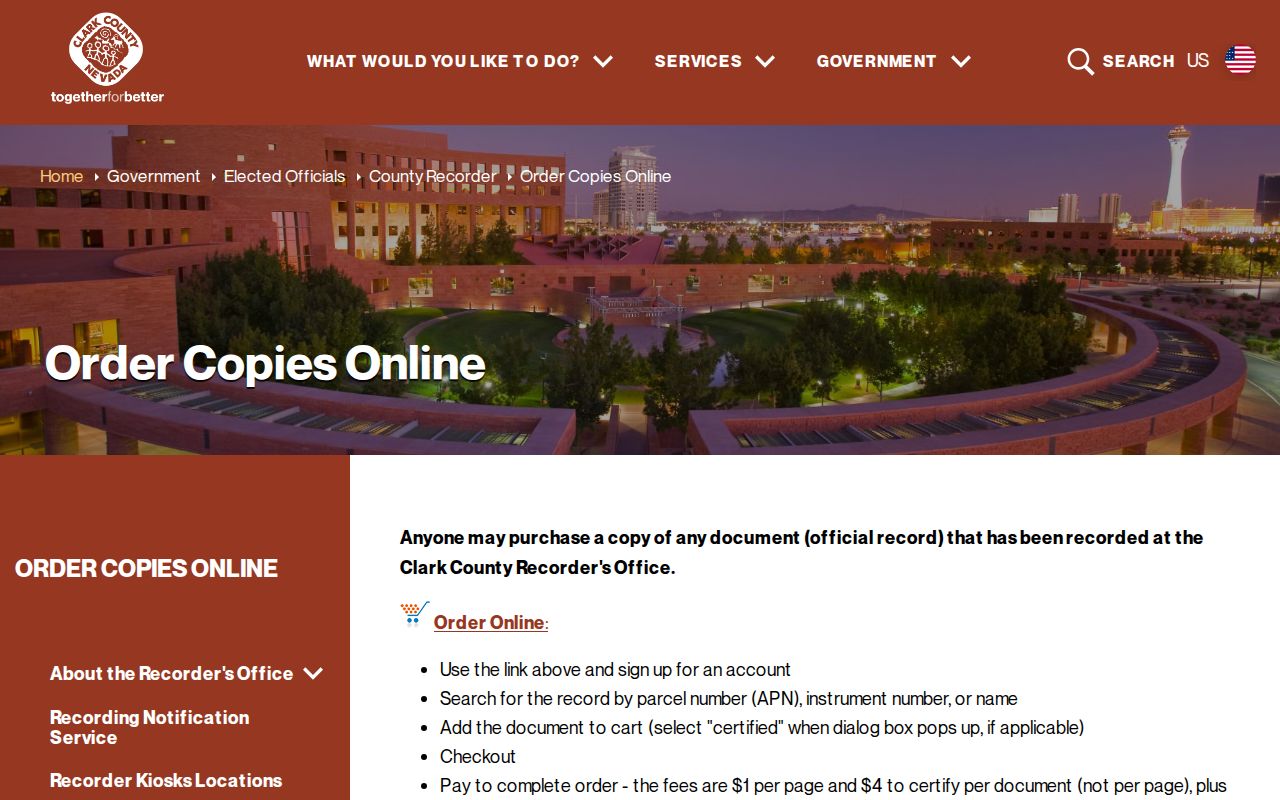
Copies can be requested online using an account, APN, instrument, or name search. The mail or in-person request form provides another documented route. Recheck the live County page for current prices and timing.
Enterprise Past Residents in Directories
Ownership is only one layer. A dated Criss-Cross or telephone directory can create an address-to-subscriber or household lead, provided the edition actually covers the target road. Record the year, edition, page, exact name spelling, and address string. The Library District’s genealogy and reference resources add directory and newspaper tools, while UNLV and the Nevada State Museum hold local and regional materials. The historical collections themselves are described in more depth in the Enterprise city directory.
Pair directory years with census years available under the 72-year rule, then compare the resulting household clue with construction dates, subdivision context, and Recorder dates. Do not treat a missing entry as proof that nobody lived there. Directory coverage can be selective, and a subscriber, owner, household head, and resident are not interchangeable labels.
Use the Library District reference and research service for the historical-search layer.

Library databases and reading-room holdings have different access terms. A library card, scanning computer, call number, reel, or staff request may be needed before a directory lead can be checked.
Enterprise Previous Residents in Context
Newspapers can extend the household layer without turning a brief mention into a personal profile. UNLV lists Las Vegas Review-Journal page images from March 30, 1929 through December 31, 1996 and full text from September 29, 1996 forward. Las Vegas Sun full text is listed from 1996 forward with other scattered holdings, and Las Vegas Age material can require a card-index search at Cahlan Research Library. Preserve a page, date, edition, and citation before relying on a result.
Maps have an equally narrow role. The Library of Congress 1928 Sanborn record and UNLV’s 1956 regional map help place streets in Las Vegas-area history, but neither proves that a modern Enterprise address stood there. Use them as regional context alongside parcel and subdivision records.
Enterprise Previous Residents Before Development
Subdivision timing can answer a simple but important question: was there a house to trace? Clark County identifies Mountain’s Edge as an approximately 2,500-acre planned community south of Blue Diamond and west of Rainbow, approved in September 2002. The development agreement was later canceled in January 2022 after changes. That chronology does not date every parcel, but it explains why an older directory, map, or newspaper might predate the subdivision.
Use the parcel’s construction, plat, subdivision, lot or block, and legal-description fields to set a realistic search period. An old regional source may still help with road continuity, yet an absent modern street is a coverage limitation rather than evidence about previous residents.
Note: Keep the source date with every address lead because Enterprise legal-town, mailing-city, ZIP, and subdivision labels can differ.
Lawful Enterprise Previous Residents Research
Use an address history for family research, estate or heir work, house history, or a careful check of a recorded property trail. Nevada public-record access does not make a current mailing address, directory listing, or recorded-party field a license to build a profile of a living person. Source-date each finding, keep protected information out of notes, and ask the custodian about redaction or confidentiality when a record appears restricted.
Personal and lawful use. Previous-resident research is for documented address history and personal research. Do not use it to stalk, harass, intimidate, or harm anyone; Nevada law addresses harassment and stalking in NRS 200.571 and NRS 200.575.