
Enterprise City Directory Collections
Enterprise has no separate incorporated-town directory shelf. Historical work instead uses Clark County and Las Vegas collections, then checks whether the year and street fit the part of Enterprise being researched. The strongest route combines the Library District’s genealogy resources, UNLV microforms and finding aids, and archival collections at the museum or Nevada State Museum. Each collection has its own access terms. A directory listing may identify a resident, household head, business, subscriber, or street entry, but it is a snapshot rather than proof of current occupancy.
| Collection | Years | Where Held | Access |
|---|---|---|---|
| United States city directories, Nevada Territory | 1861-1882 | UNLV Microforms, Lied Library | Four reels, call F839.5 .U58x 1975; in-person microfilm access |
| Las Vegas Criss-Cross City Directory | 1954, 1956, 1957, 1959, 1966, 1967 | Nevada State Museum, Las Vegas | Verify the edition, road coverage, and reading-room availability |
| Las Vegas city directory | 1969 | UNLV MS-00809 finding aid, box 12 | Finding-aid and archival-request route, not a full online directory |
| Las Vegas history collection | City and telephone directories; 1970-1982 card index | Las Vegas-Clark County Library District | Collection and archive access; card index supplies newspaper leads |
| Review-Journal and Sun | 1929-present runs vary by title and format | UNLV and library newspaper resources | Image, full-text, scanning-computer, or citation access varies |
Older territorial volumes and regional Las Vegas titles should not be treated as proof that a modern Enterprise subdivision existed in the same year. Record the collection name, edition, reel or box, and page before drawing a connection. Those details also make it easier to return to a source when a spelling or address needs another check.
Enterprise City Directory Library Routes
The Las Vegas-Clark County Library District genealogy hub is a practical first stop for historical name research. It lists HeritageHub, Ancestry Library Edition, Chronicling America, Fold3, HeritageQuest, MyHeritage, NewspaperArchive, city directories and local materials. Library-card rules and off-site availability vary by database, so access that works in a branch may differ from access at home. The Library District reference resources also point to directory-oriented research tools and digitized newspaper material, which are leads rather than a current resident register.
The Library District’s Las Vegas history collection is useful when a directory search needs context. Board-minute references identify city and telephone directories, clippings, and a card index to Sun and Review-Journal material from 1970 through 1982. A card is a path to a date and page, not a finished biography. Ask for the citation or clipping location, then check the underlying newspaper or collection record.
See the Library District genealogy resources before choosing a database or library visit.
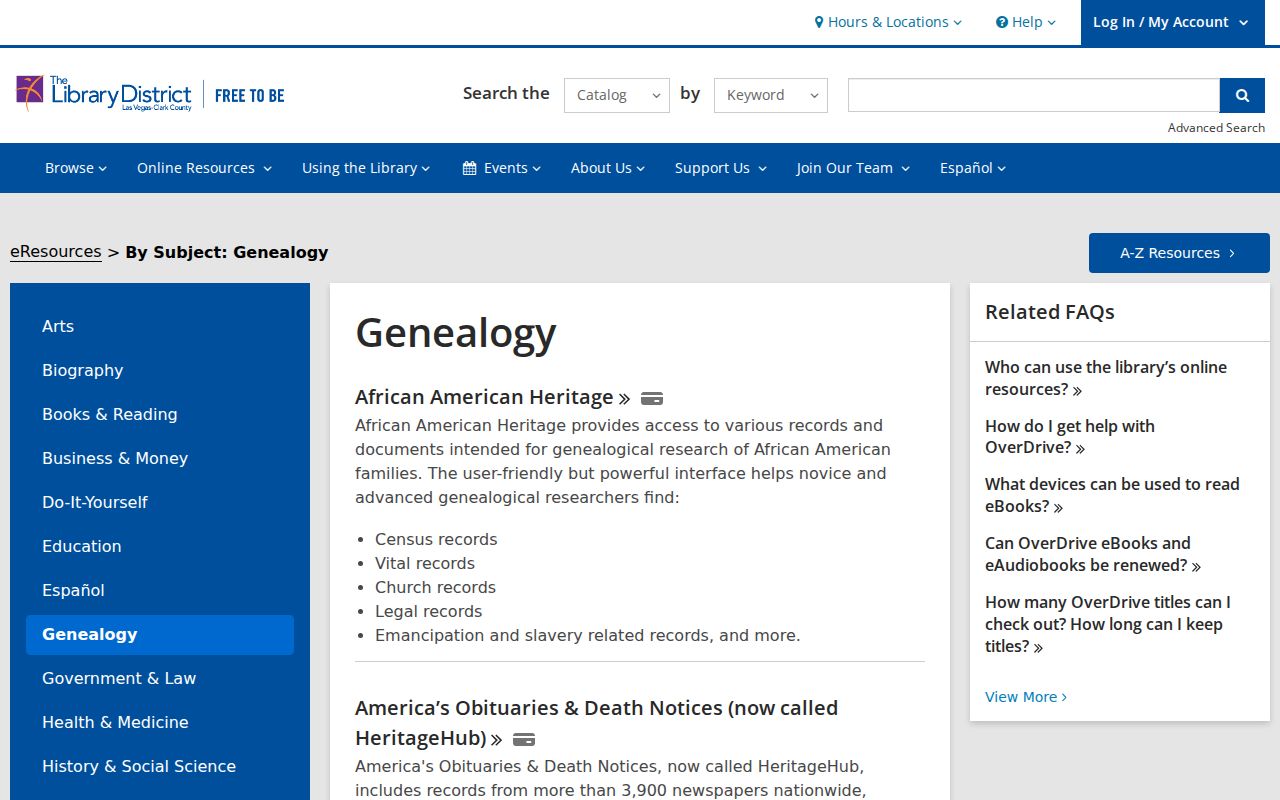
The resource list shows why the Enterprise search often needs both a directory volume and a newspaper or genealogy database to confirm a dated name-and-address association.
Enterprise City Directory Territory Reels
UNLV’s Nevada Territory directory record identifies “United States city directories, Nevada Territory, 1861-1882,” published by Research Publications. The set occupies four reels and is cataloged as F839.5 .U58x 1975, with guide MICRO F839.5 .U58x 1984a. Its collection description names residents, occupations, residences, family heads, businesses, officers, street directories, churches, schools, associations, banks and advertisements as possible entry types.
These reels are valuable for Nevada and regional family research, but they predate Enterprise’s suburban footprint. Treat a find as territorial or regional context unless the location and address fit independently. UNLV Lied Library is at 4505 S Maryland Parkway and lists 702-895-2111 for collection help. Bring the call number and the exact collection title when asking for the reels.
Use the UNLV microfilm collection record to confirm the call number before a reading-room visit.
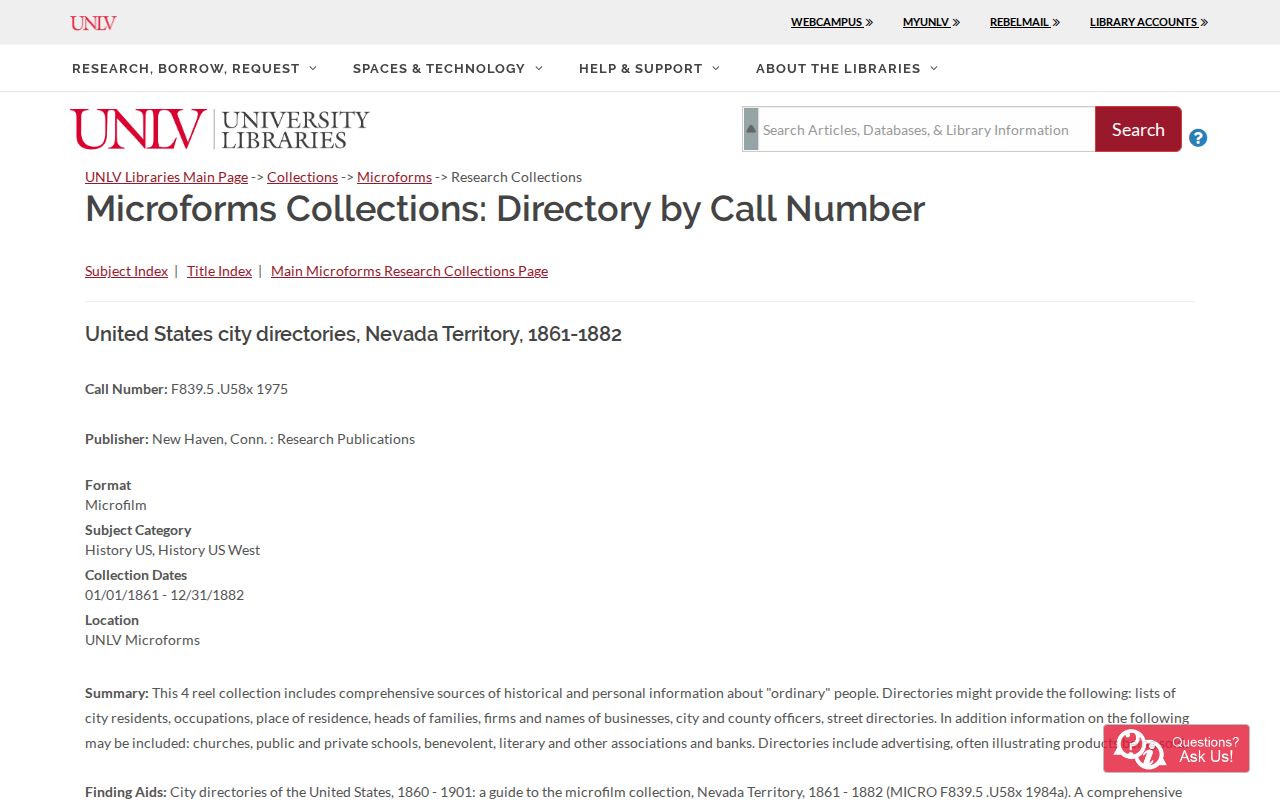
The catalog screen documents collection-level scope, not an individual person’s entry, so a reel and page citation still matter after a search succeeds.
Enterprise Criss-Cross Directory Years
Las Vegas Criss-Cross editions are the reverse-address layer most useful for historical street work. Official City report bibliographies identify Luskey Brothers Official Las Vegas Criss-Cross City Directory editions for 1956, 1957, 1959, 1966 and 1967. A Floyd Lamb Park survey also cites 1954 and 1956. The reports place those holdings at the Nevada State Museum, Las Vegas. Confirm that a particular edition includes the target road before relying on it, because a volume’s title does not guarantee coverage of a later Enterprise development.
A criss-cross directory is arranged to help work from an address toward a listed subscriber or household lead. It can support a carefully dated association, but it does not establish every person who lived at the property. When an address is found, write down the street spelling, number, edition, page, and any notation exactly as printed. Then compare it with parcel construction dates and historical map context.
Reading an Enterprise City Directory Entry
An Enterprise directory entry should be transcribed as a field set, not expanded into a story. The UNLV collection page describes what its volumes may contain, yet no individual entry image or abbreviation key was exposed in the captured online record. That limitation matters. Preserve only what the examined entry actually displays, including its edition and page or reel reference. A person’s name in a directory may refer to a resident, head of household, business contact, officer, or telephone subscriber.
| Name as printed | Record spelling, initials, suffixes, and any relationship notation exactly. |
|---|---|
| Spouse or household notation | Capture a parenthetical relationship only when the volume shows it. |
| Occupation or employer | Copy the stated work or organization without treating it as current information. |
| Street address | Keep the number and street spelling as printed, then compare it with historical geography. |
| Owner, renter, widow, or abbreviation mark | Use the volume’s abbreviation key before interpreting any mark. |
| Edition reference | Keep the year, page, reel, image, or box so the entry can be checked again. |
- Criss-cross directory
- A directory section arranged by street or address rather than primarily by surname.
- Householder index
- An index that may identify the person presented as the household head, not necessarily all occupants.
- Abbreviation key
- The volume’s explanation of shortened labels and symbols; consult it before reading an owner, renter, or relationship mark.
Note: A missing name can reflect the volume’s purpose, coverage, or indexing practice and is not proof that the person was absent from Enterprise.
Enterprise Newspaper Directory Leads
Newspapers can fill gaps between directory editions. UNLV lists Las Vegas Review-Journal page images from March 30, 1929 through December 31, 1996, and full text from September 29, 1996 forward. Las Vegas Sun full text is listed from 1996 forward, with older and scattered holdings. Some citation-only indexes are available on UNLV scanning computers, while Las Vegas Age index cards are held at the Cahlan Research Library.
Search a surname, spelling variant, street, or event, then keep the date, publication, page, and collection identifier. A clipping can be a strong historical lead, but it does not turn a dated mention into present residence evidence. The UNLV Nevada newspapers collection is the appropriate access point for checking available runs and formats.
Enterprise City Directories for Family History
Tracing a household works best when each observation stays tied to its year. Begin with one dated entry, then follow the same spelling and address through later editions. Pair directory years with the applicable federal census years under the 72-year rule, and compare both with Recorder or parcel chronology. The goal is a sequence of documented leads, not a conclusion built from one matching surname.
- Find the first located edition and copy the name spelling, address, household notation, occupation, and page or reel.
- Search the next available edition for the same name, spelling variants, and the prior street address.
- Check the reverse or criss-cross section where one is available, recording the street form and page.
- Compare the dated entries with the relevant census release, parcel construction information, and recorded-instrument dates.
- Use newspaper indexes or obituary notices as dated community leads, then preserve the source citation with the household worksheet.
A disappearance from one book can mean a move, a death, a changed subscriber name, an omitted household, or a gap in the run. It should trigger another search, not a final conclusion. For a modern address chain, use the Enterprise Street Directory after the historical collection has supplied its dated lead.
Enterprise Directory Gaps in Planned Communities
Mountain’s Edge shows why an older directory may have no useful entry for a present Enterprise street. Clark County describes the planned community as roughly 2,500 acres south of Blue Diamond and west of Rainbow, approved in September 2002. The development agreement was later canceled in January 2022 after later changes. That chronology is a local search boundary: a 1950s directory can help with regional Las Vegas history, but it should not be expected to list a street created for later subdivision growth.
Use older maps with the same care. The 1928 Las Vegas Sanborn record and UNLV’s 1956 regional map can explain road continuity and regional expansion, but neither guarantees that a modern Enterprise street or subdivision appears. For an address search, compare the directory date, parcel legal description, subdivision, plat reference, and construction-era information before calling a gap meaningful.
Enterprise Recorder Preservation Story
Clark County’s record-preservation history explains why historical leads are split among shelves, reels, and current portals. The Clark County Museum’s Recorder history describes early 1909-1953 County records in large volumes, including deeds, trust deeds, mortgages, mining notices, and marriages. Those records were microfilmed for security in a fireproof vault. The same historical account describes newspapers being microfilmed until the library took over in 1987, a useful provenance clue when moving between government history and library newspaper collections.
Today, the Recorder transfers documents into permanent digital images and returns originals, while the index is organized by principal party name and year. Online summary access is not the original record. When a historical directory suggests a property or family connection, the Clark County Recorder can provide the separate recorded-document route, subject to its index, copy, and access limits.
Enterprise Archive Access Limits
The Clark County Museum offers local archives, exhibits, and historic homes in Henderson. Its County page lists daily hours of 9:00 to 4:30 and free admission, but the museum is a context and archival-lead source rather than a guaranteed Enterprise address file. The Clark County Nevada Genealogical Society's resource list and Heritage Room volunteers at Paseo Verde Library point to territorial and census indexes, State Library material, UNLV, FamilySearch, maps, and other societies.
Many useful records are not digitized. The Library of Congress local-history guide directs researchers to Nevada archives and societies for that reason, and FamilySearch catalog results need a Clark County or Enterprise relevance check before they are treated as local coverage. Plan for a library card, a scanning computer, a call number or reel, and sometimes an in-person archive visit.
Visit the Clark County Museum collection page when an Enterprise directory lead needs regional history or archival context.
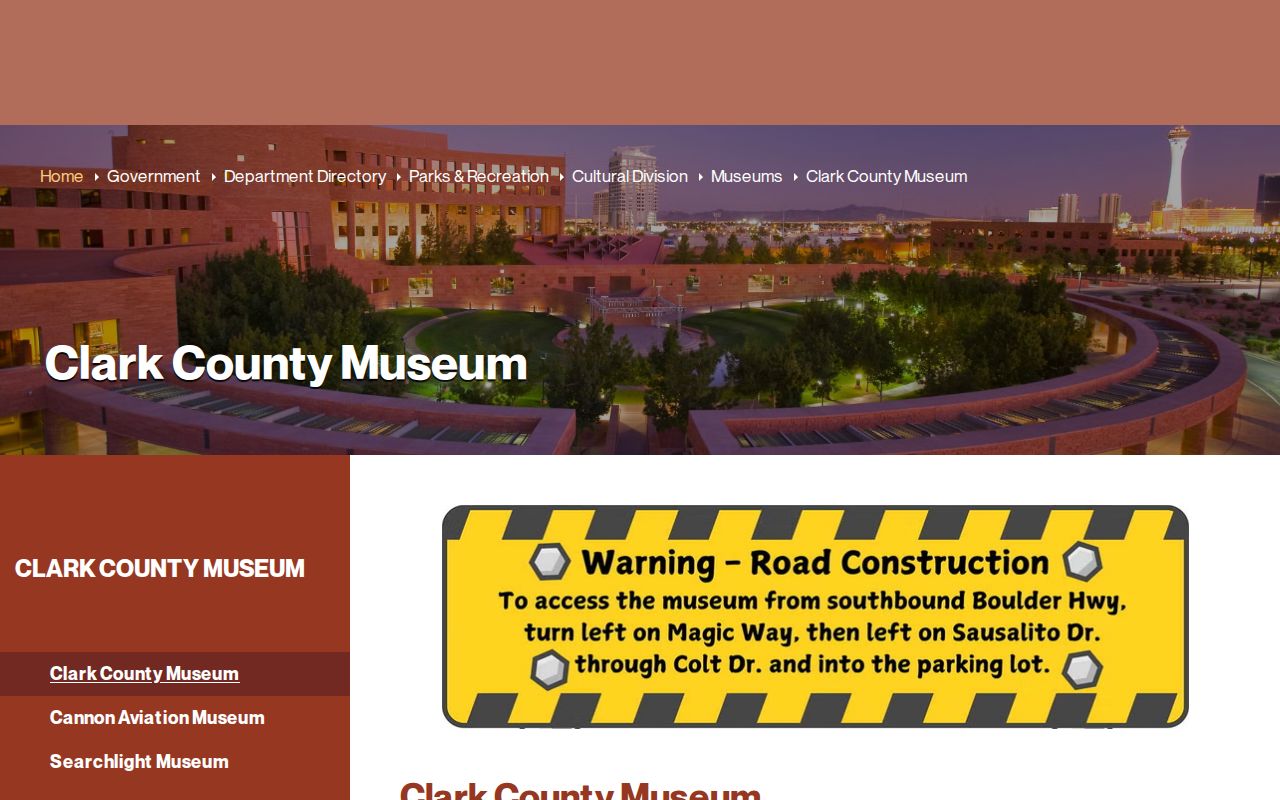
The museum route adds regional context and preservation history, while edition-specific directories and newspapers remain the evidence for a dated name or address association.